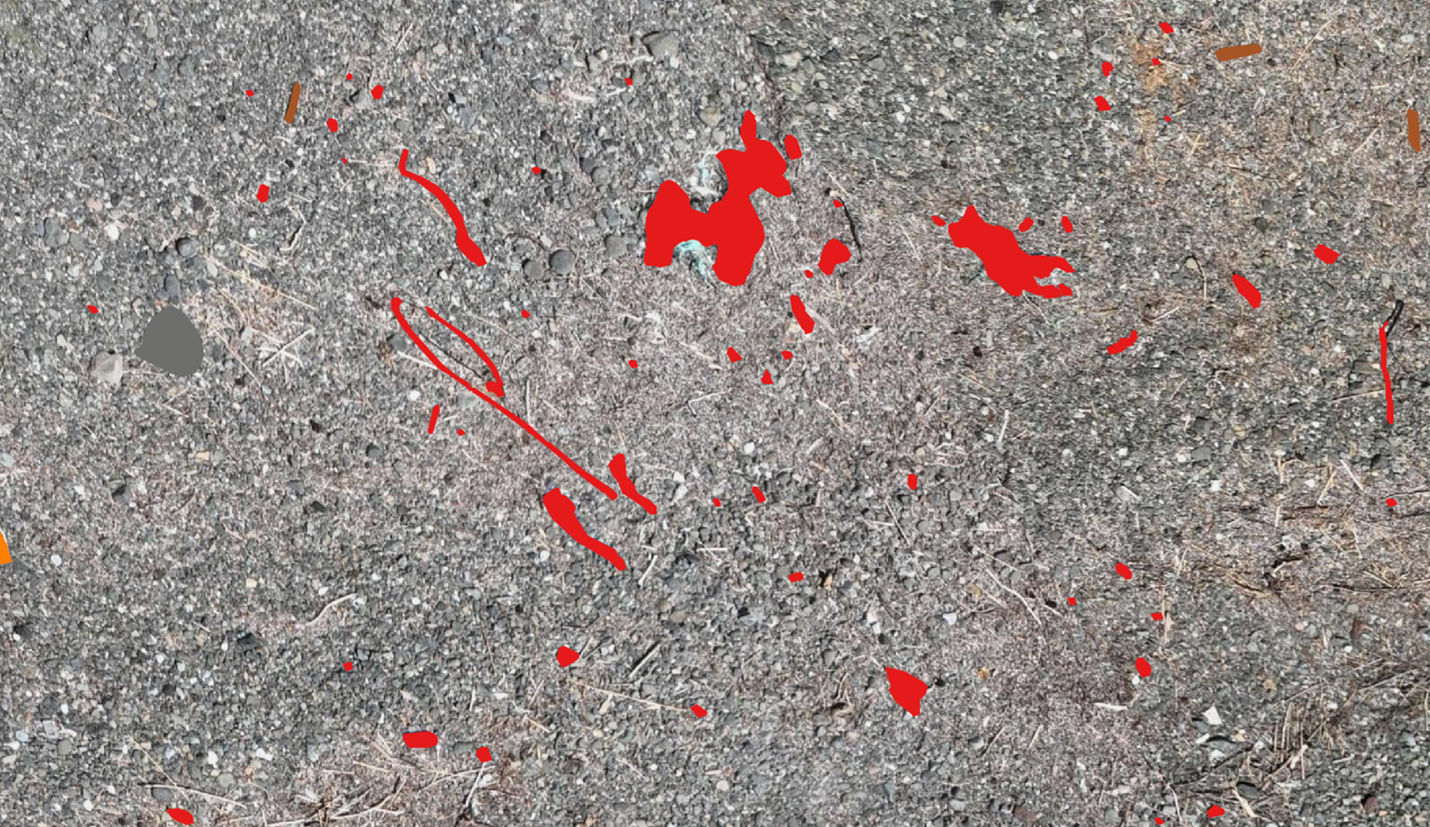
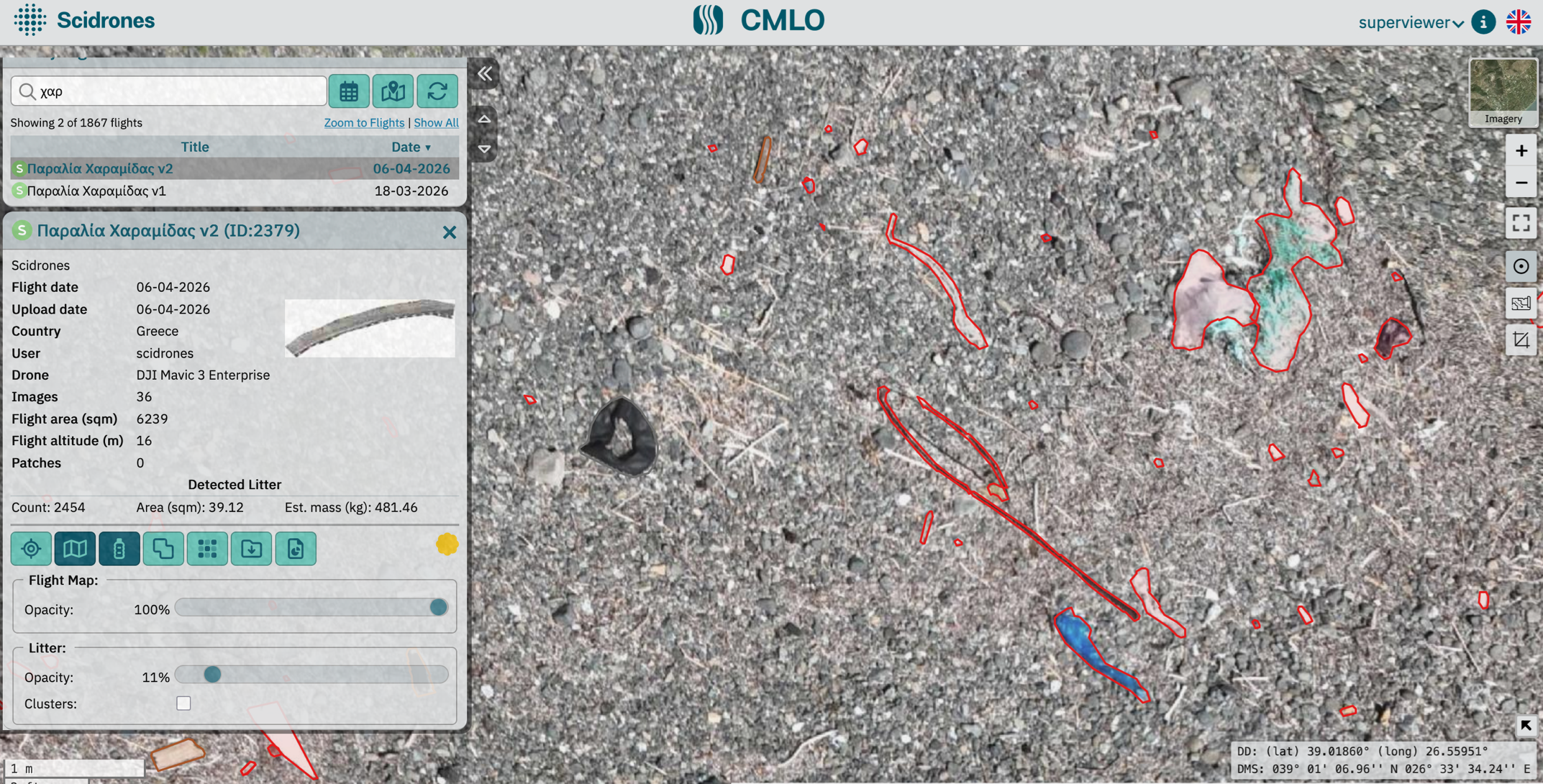
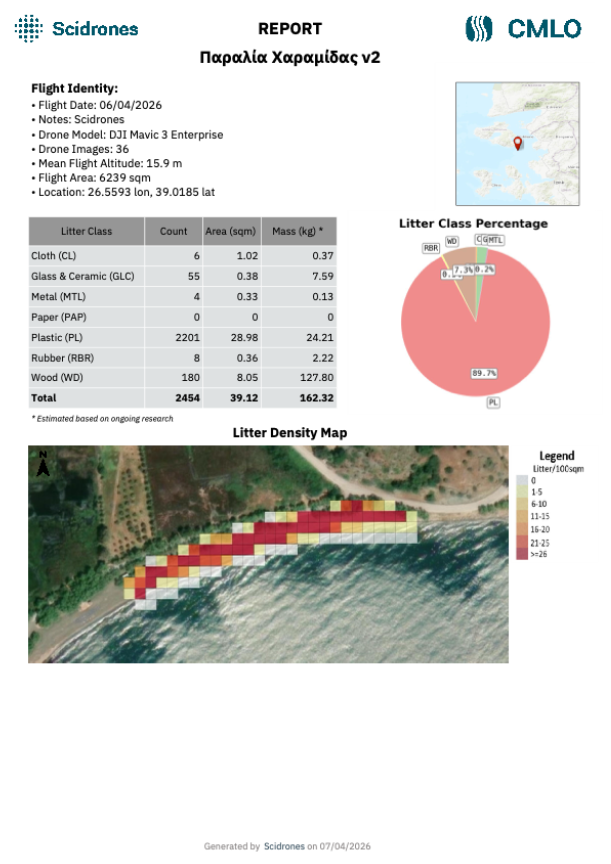
A new survey at Charamida beach on Lesvos, conducted by Scidrones – a spinoff company of the University of the Aegean – using drones and artificial intelligence, identified on April 6, 2026 a total of 2,454 pieces of litter across an area of 6,239 square meters, with an estimated mass of 162 kilograms, occupying approximately 40 square meters.
The survey was carried out using CMLO (Coastal Marine Litter Observatory), an internationally awarded Greek platform developed by Scidrones that combines aerial drone surveying, artificial intelligence, and geospatial data mapping to detect and document litter on beaches. The system is already in use in 23 countries, with more than 1,800 missions and 2.6 million recorded pieces of litter, supporting monitoring activities, targeted cleanups, and environmental management.
The analysis identified specific hotspots of increased litter accumulation, demonstrating that pollution is not uniform but concentrated in zones where targeted interventions can be carried out.
The data show that beach cleanups can be made more effective when they are based on actual mapping of the problem. Rather than broad, untargeted interventions, the relevant municipal services can direct cleanup crews to where the need is greatest, improving effectiveness and reducing costs.
At one of Lesvos’s most frequented beaches, the use of drones and artificial intelligence highlights a smarter approach to protecting the coastal environment and underscores the need for more frequent and targeted cleanups, especially ahead of the peak tourist season.
The use of such data can serve as a valuable tool for ensuring that cleanup interventions are carried out in a more timely, targeted, and environmentally impactful way.
From Mytilene, for Lesvos. A technology developed on the island and already applied internationally can and deserves to be utilized more in the very place where it was born.